Plancha Grill Temperature: The Three Heat Zones of Your Fire Plate
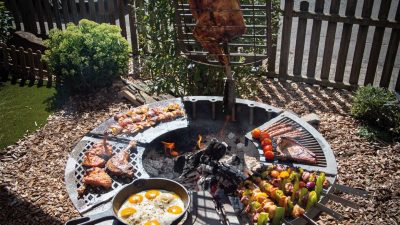
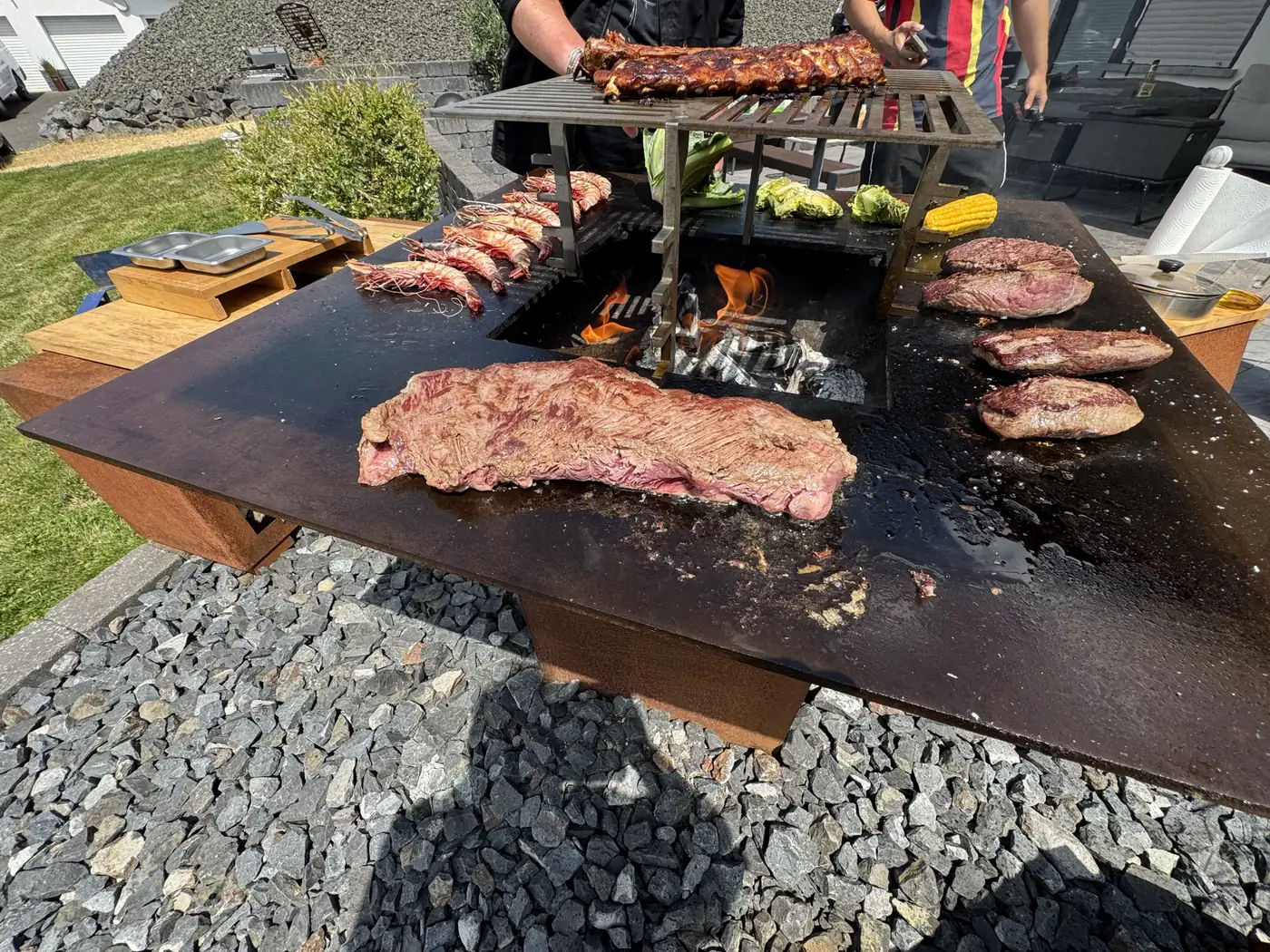
You put the steak in the center, the vegetables at the edge, and both finish cooking at the same time. That’s no accident — it’s physics. A plancha fire plate is never the same temperature everywhere. This guide shows you the three temperature zones of your plate, the exact degree ranges for each zone, and how to use them deliberately for whatever you’re grilling.
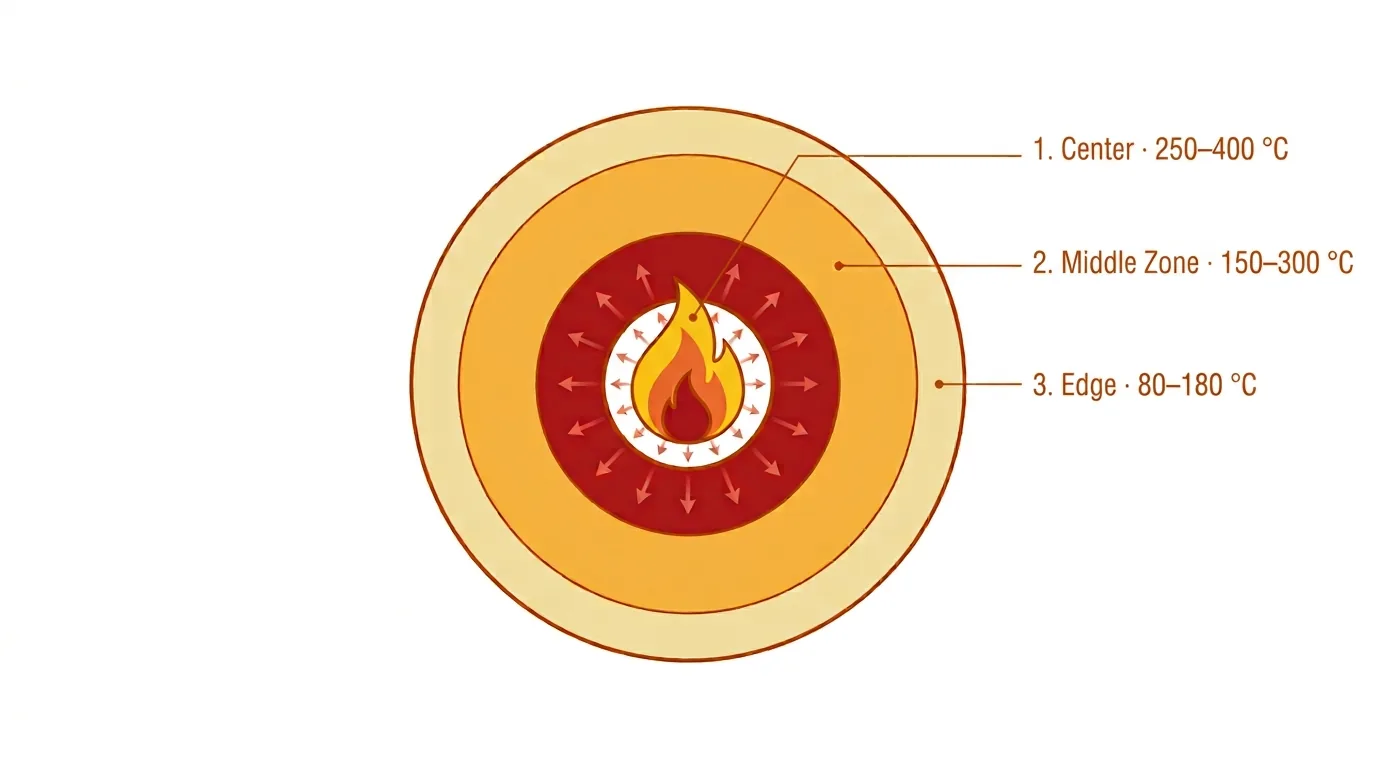
Quick answer: How hot does a plancha grill get?
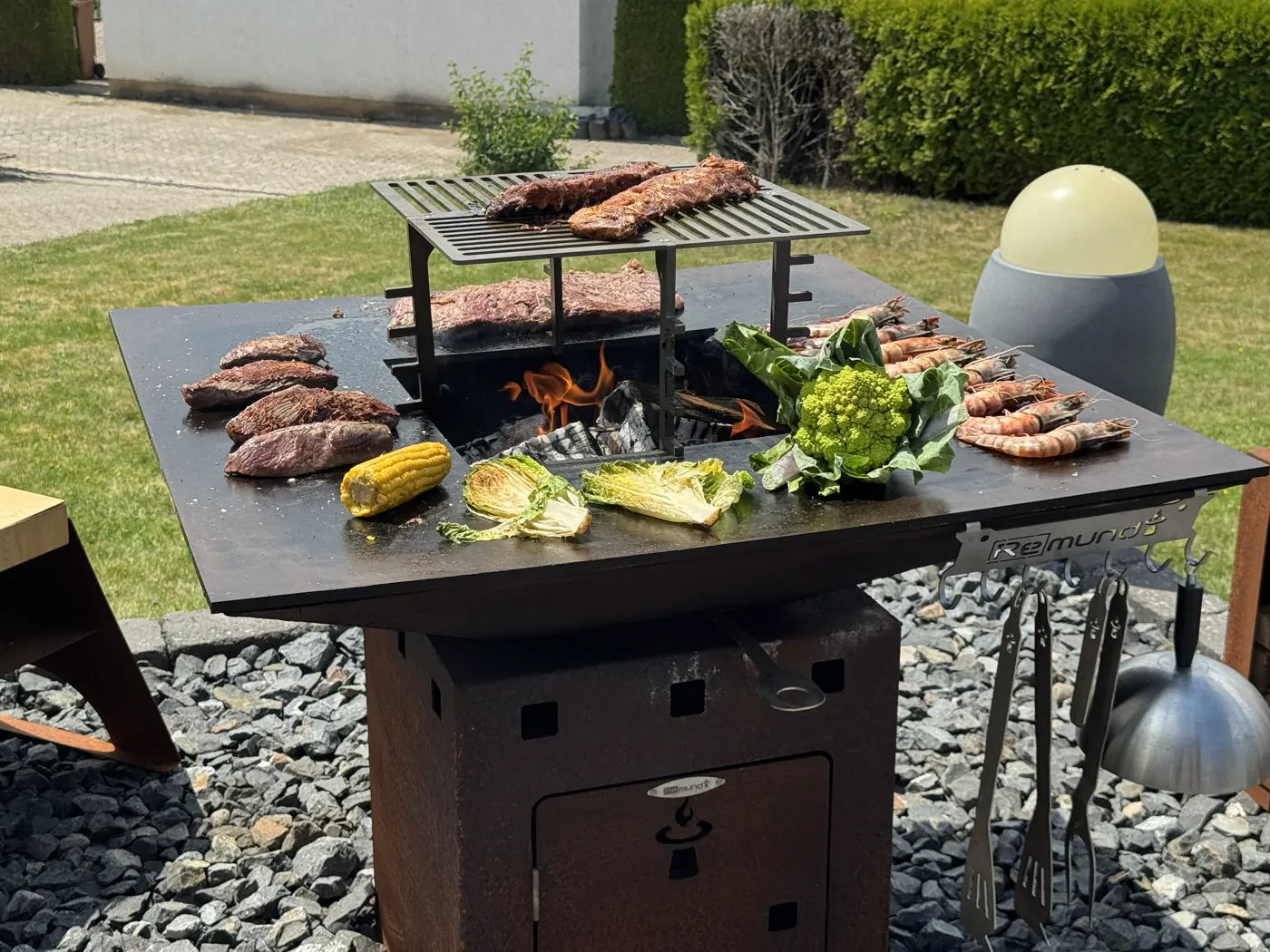
A Remundi fire plate reaches three temperature zones at the same time: 250–350 °C in the center (up to 400 °C under strong firing), 150–200 °C in the middle zone, and 80–100 °C at the outer edge. The zone determines the result, not the clock. Center for searing, middle zone for cooking through, edge for keeping warm.
These values apply to a freshly lit plate. As runtime increases, the heat migrates outward: grill master Uwe Schott observes in practice that once the plate is fully heated through, the middle zone runs closer to 280–300 °C and the edge climbs to as much as 180 °C. These are practical guideline values from his own experience, not manufacturer-confirmed or measured with instruments.
Why a Plancha Plate Doesn’t Heat Evenly
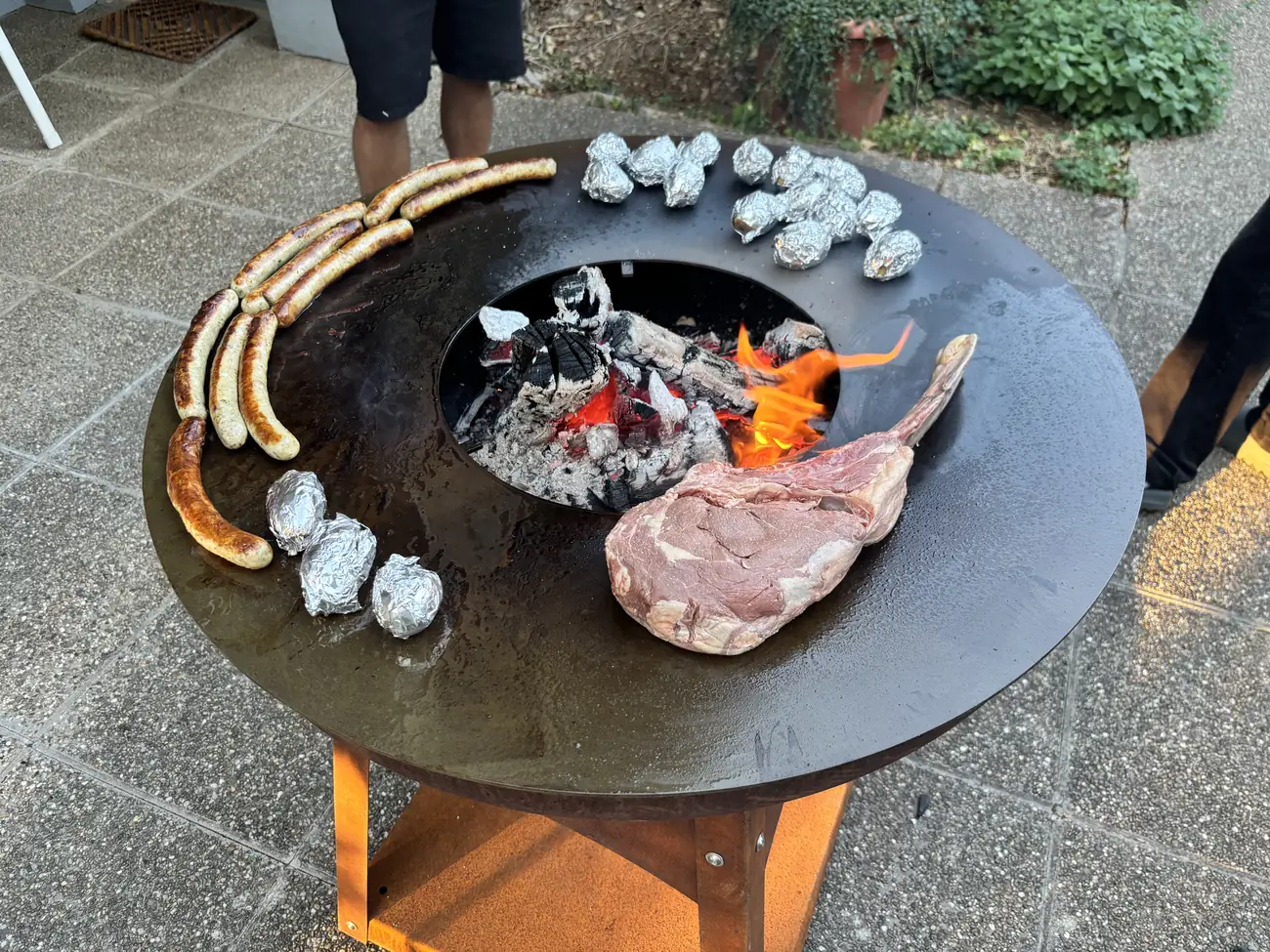
The fire sits at the center of the fire bowl, directly beneath the plate. Heat travels outward from there and loses strength along the way. That gradient is exactly what makes the plate such a versatile tool. You don’t need a second cooking station for the vegetables while the meat sears hard. One plate is enough — you just need to know where to put what.
Zone 1: The Center, Up to 400 °C
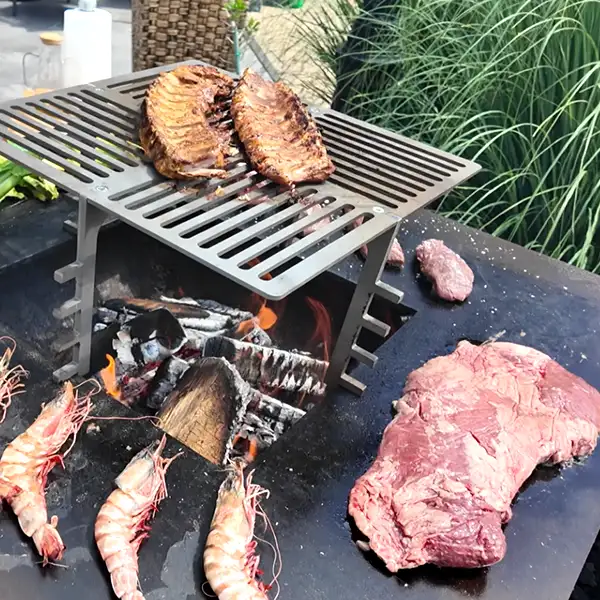
Directly above the fire opening is where the plate’s sharpest heat forms. This is where the crust develops, where the roasted flavors form. A steak needs only a few minutes per side here. With the topper attachment, the meat also gets a juicy sear pattern, since the heat is concentrated and comes from below.
Grill master Uwe Schott confirms this value from his own practice: right at the fire opening, you’ll find approximately 350 °C. A guideline from his experience, not a measured, fixed value.
Expert Tip: Turning Steak Correctly Across the Heat Gradient
Grill master Uwe Schott (Grillschmiede Schott) recommends a simple principle for steaks on the fire plate: sear 2 minutes on one side first, then 2 minutes on the other. After that, don’t finish it at full heat — instead, move the meat back and forth two or three times between the center and the middle zone. That way the crust forms in the center while the meat slowly cooks through in the middle zone, instead of burning outside and staying raw inside.
For thicker steaks, Uwe goes one step further: after searing, he rests the meat on a warmed wooden plank at the edge of the plate (around 80–90 °C) and gives it a brief turn on the plate again every 10 to 20 minutes, instead of leaving it at full heat the whole time. This lets the heat work through evenly until the meat reaches a core temperature between 56 and 58 °C — the point at which he takes it off the plate.
Zone 2: The Middle Zone, 150 to 200 °C
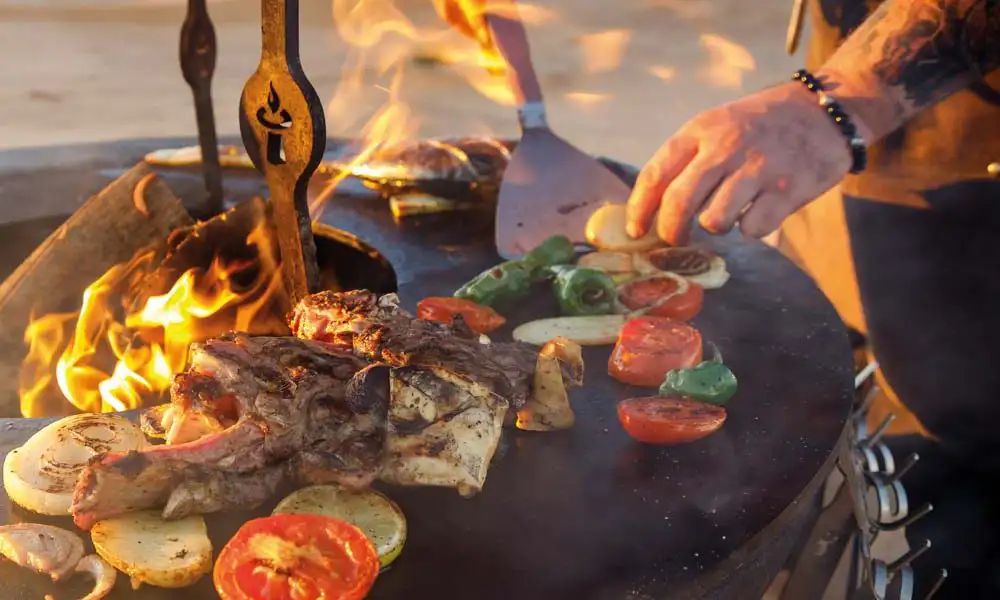
Most of what you’re grilling spends its time here. Vegetables cook gently in their own juices without burning. Fish cooks through until glossy. Smashed Burgers get their final minutes here after the crust has formed in the center. This zone is also why one plate works for several dishes at once, without one blocking the other.
These 150–200 °C apply to a freshly lit plate. Once the fire has been running longer, the heat migrates outward: grill master Uwe Schott observes closer to 280–300 °C in this zone at that point. A practical value from his own experience, not manufacturer-confirmed.
A fried egg belongs here too, though not directly on the open plate: grill master Uwe Schott places a roasting ring between the middle zone and the edge, cracks the egg into it, and lets it set inside. That way the yolk stays put instead of running across the plate.
Zone 3: The Outer Edge, 80 to 100 °C
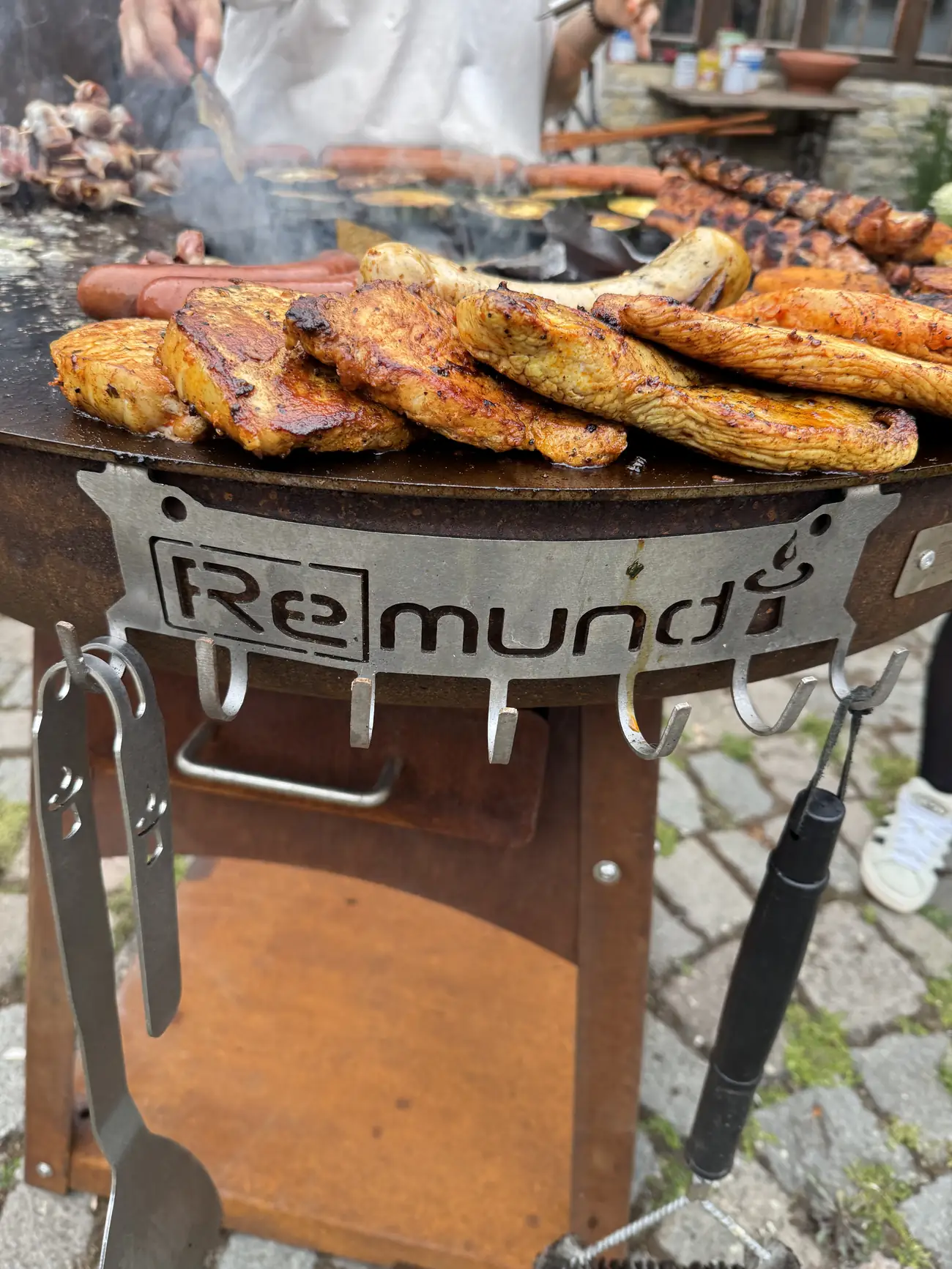
At the edge, the plate becomes a resting zone. Meat that’s already grilled can rest here so the juices redistribute instead of running out the moment you cut into it. Vegetables that are already cooked stay warm without cooking further. For anything that’s done but still has to wait, the edge is the right spot.
The 80–100 °C also applies to the early phase. The longer the plate is in use, the warmer the edge gets too. According to Uwe Schott, once the plate is fully heated through, it can climb to as much as approximately 180 °C. A quick check with your hand or the water drop test gives you clarity fast.
This cooler zone is also the right place for pancakes. Grill master Uwe Schott deliberately leaves only embers instead of open flame under the plate for this and doesn’t add the batter until the overall heat has settled down. Only once bubbles form and pop on the surface is the underside golden brown and the pancake ready to flip.
The Low Zone in Winter: More Than Just Keeping Food Warm
“A real game-changer for winter.”
Uwe Schott, Grillschmiede Schott
With the topper attachment, the low zone becomes a drinks station. A pot of mulled wine on the topper stays hot the whole time thanks to the residual heat, enamel mugs sit right next to it on the plate, and everyone gathers around the warm steel. Meanwhile, everyone can still grill something small on the free surface. The fire plate stays a reason to go outside, even once grilling season is officially over.
Reading Temperature Without a Thermometer: The Water Drop Test
You don’t need to measure the zones to recognize them. The most reliable test works with a few drops of water: splash some water on the plate and watch what happens to the droplet.
Known as the Leidenfrost effect, this test won’t replace a thermometer down to the degree, but it reliably shows you which zone is ready for a hard sear and which is better suited for gentle cooking.
Want More?
The temperature zones are just the start. Discover the right grills, watch the technique in action on video, or find inspiration for your next dish.
The Most Common Mistakes with Temperature Zones
Placed too early. If you put food down before the chosen zone has reached its temperature, you lose the crust. The meat cooks instead of browning, and releases its juices too soon.
Wrong zone for the dish. Delicate vegetables or thin fish fillets burn on the outside before they’re cooked through in the center. Conversely, a thick steak stays pale and crustless at the edge. The zone determines the result, not the clock.
Underestimating residual heat. Even after you take it off, meat keeps cooking from the heat it has stored. If you want to hit the exact doneness, take the food off the plate just before its target and let it rest at the edge or nearby.
How to Control the Temperature Zones Yourself
The three zones aren’t a fixed state. You can shift them by pushing the embers inside the bowl to one side when you want more heat at the outer edge. More wood in the center pushes the 400 °C mark further outward; less wood lets the whole plate cool down.
The plate’s sheer runtime also shifts the zones. Once the plate has been running for a while, the water drop test is more reliable than a fixed time estimate for judging the current temperature of a zone.
On the Remundi Pro Series, a steplessly adjustable air supply control takes care of this: more air, more heat; less air, longer and gentler cooking. You stay in control of embers and temperature for hours without constantly adding wood. The Basic Series comes without this control, but gets you at the fire in 15 minutes. That’s plenty for a spontaneous evening; for long grilling sessions with multiple courses, the air supply control pays off.
Our Recommendation: Fire Plates with Air Supply Control
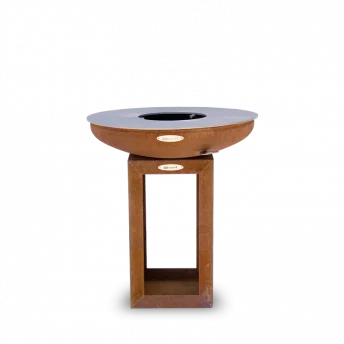
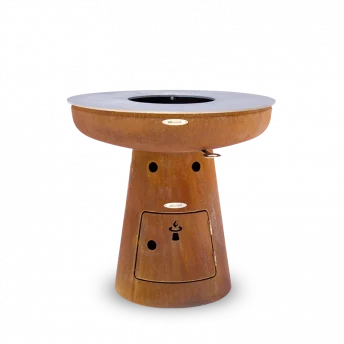
Want to control all three zones with precision? These two models give you full control over embers and temperature:
Is a Plancha the Same as a Fire Plate?
A plancha originally refers to a smooth, closed grill plate that also runs on gas or electric grills. A fire plate like the Remundi, by contrast, is fired with wood or charcoal and has the central fire opening that creates the three temperature zones in the first place. Both terms are often used interchangeably in everyday language — the grilling principle of a plate instead of a grate is identical.
Summary
Center: 250–350 °C, up to 400 °C (Uwe Schott: approx. 350 °C at the fire opening). For searing.
Middle zone: 150–200 °C, once heated through approx. 280–300 °C (Uwe Schott’s practical value). For cooking through.
Edge: 80–100 °C, once heated through up to approx. 180 °C (Uwe Schott’s practical value). For keeping warm and resting.
Control: shift the embers, use air supply control, or factor in runtime.
One plate, three zones, every dish in the right spot.
Frequently Asked Questions About Plancha Grill Temperature (FAQ)