Burning in and cleaning the hotplate – how to do it right
The new fire plate has arrived. The barbecue is ready. But don’t put anything on it yet. Burning in is the first step – and it determines how well your plate will work for years to come. This guide shows you the process step by step. With a clear recommendation on the right oil – straight from the experts.
Short answer: Burn in the hotplate in 4 steps
Burning in a hotplate means building up a protective layer (patina) by heating it with oil. You need refined rapeseed oil (smoke point approx. 220 °C), one hour and wood. Procedure: Clean plate with water → heat to 250-300 °C → rub thinly with rapeseed oil → immediately place food on the grill. Do not use olive oil (becomes bitter from 180 °C). The patina gets stronger with every barbecue. To clean after grilling: Scrape off residues, thinly re-oil – no washing-up liquid, no water.
Why do you have to burn in a fire plate?
Steel has no factory protection – you build up the protective layer yourself. During the baking process, the oil polymerizes at high heat to form a hard, glass-like layer (patina), which becomes stronger with every use.
How do I clean the hotplate before the first burn-in?
Wipe both sides with a damp cloth. Remove dust, transportation residues and production residues. Wipe dry. Finished.
No washing-up liquid. No scouring powder. Just water and a cloth.
What temperature must the hotplate be heated to for baking?
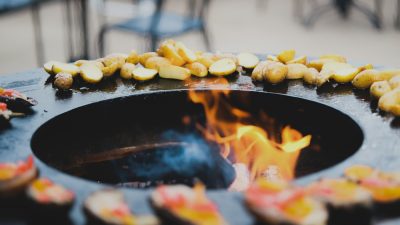
Light the grill strongly. Add wood until the plate is really hot. For hotplates with a central opening, you can easily add wood from above. The plate must remain at a high temperature throughout – allow at least one hour.
A fire plate has different temperature zones: 250-350 °C is reached at the center near the fire opening, 150-200 °C in the middle zone and only 80-100 °C at the outer edge. The middle to inner zone is crucial for baking – this is where the oil polymerizes most effectively.
Which oil is suitable for burning in a hotplate?
As soon as the plate is hot: spread a thin layer of rapeseed oil over the entire surface using kitchen paper. Thin means thin. No puddles, no pouring. A touch is enough.
Expert opinion: Which oil to use for baking?
“Rapeseed oil or sunflower oil. Exclusively. No olive oil – it becomes bitter at the temperatures of a hotplate and spoils the taste.”
Uwe Schott, Grillschmiede Schott
This is not a matter of taste. It’s a matter of physics. Olive oil has a smoke point of only approx. 180 °C (extra virgin) – at hotplate temperatures of 250-350 °C it decomposes and produces a bitter taste. Refined rapeseed oil has a smoke point of approx. 220 °C, remains more stable, polymerizes cleanly and forms a hard, even patina.
Clear recommendation: rapeseed oil. Always.
Why should you grill immediately after baking?
And now comes the point that most people get wrong.
The usual recommendation is: apply oil, wait until the panel turns black, repeat. This works – but there is a better way.
“Start grilling immediately after the first oiling. The patina is best formed by the combination of heat, oil and the juices released from the food.”
Uwe Schott, Grillschmiede Schott
The food itself is part of the searing process. The juices, the fats, the roasting aromas – everything contributes to the patina. If you spend three hours just applying oil and waiting, you are giving away the best catalyst: the food itself.
So: apply oil, put steaks on top, vegetables next to them. The plate gets better with every piece of food you grill.
How do I clean the hotplate properly after grilling?
The process after every barbecue is done in two minutes:
1. Scrape the remains clean with a spatula while the plate is still warm.
2. Rub thinly with rapeseed oil – a piece of kitchen paper will do.
3. Cover or store like this.
No washing-up liquid. No water. No brush. The patina is your capital – treat it accordingly.
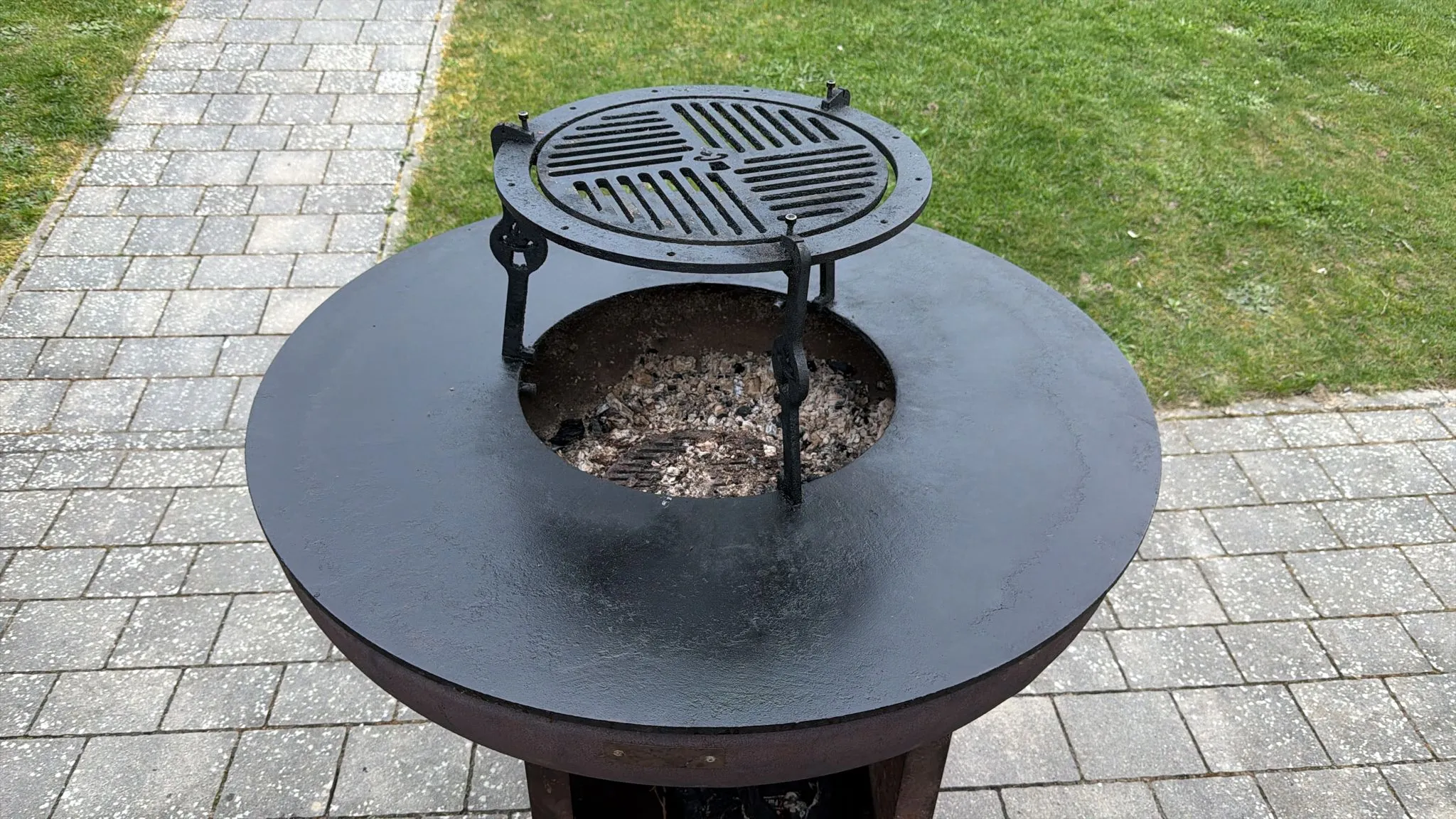
You can find more details on care on our page Care instructions for grill plate and grill modules.
Our recommendation: Fire pits with fire plate
Still looking for the right fire plate to season? These two models are especially popular with our customers:
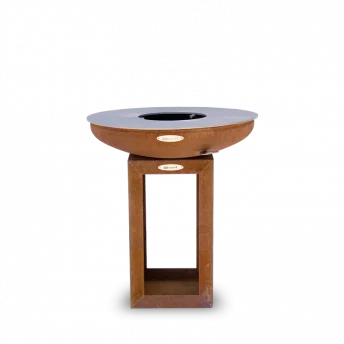
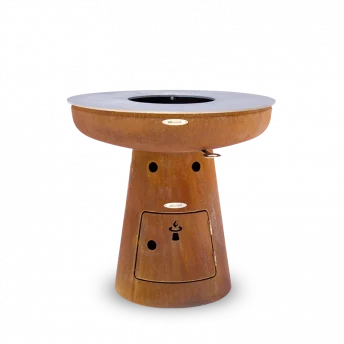
View all fire pits with fire plate →
What to do if the hotplate rusts?
Rust is not a death sentence. Every fire plate and every module can be sandblasted. Afterwards, the plate is as good as new. The baking process starts all over again – but it takes an evening, not longer.
What 3 mistakes should I avoid when burning in a hotplate?
Too much oil. Thin layers form a hard patina. Thick layers form a sticky, uneven surface that peels off.
Use olive oil. It will be bitter. Period.
Clean with washing-up liquid after grilling. Washing-up liquid dissolves the patina. Months of work destroyed in a minute. Just putty and oil.
Summary
Oil: Rapeseed oil. No olive oil.
Process: Heat up, oil thinly, grill immediately.
Care: putty, oil, store.
For rust: sandblast, re-bake.
Four steps. One evening. A plate that gets better with every barbecue.
Frequently asked questions about burning in and cleaning the hotplate (FAQ)